


Fast fashion is a production and consumption model that aims to deliver changing trends to consumers as quickly as possible and at low costs. This system does not only carry the speed of the fashion world from runways to stores; it also changes our purchasing habits, how long we use a garment, and what eventually happens to that garment. The fast fashion system is built on a cycle that creates a constant sense of novelty and supports greater production and greater consumption.
In the past, fashion brands mainly released a few major collections, particularly spring-summer and autumn-winter, whereas today some brands can introduce new products at much shorter intervals. A trend that appears on social media can be designed, produced, shipped to different parts of the world, and presented to consumers within a short period of time.
At first glance, this speed may seem to make the fashion world more accessible and democratic. We can access trendy products at lower prices. We can change our wardrobes more frequently and experiment with different styles. However, the price tag on a product does not show us the full true cost of that product. The water, energy, and raw materials used; the waste generated during production; microplastics originating from synthetic fibers; logistics processes; unsold stock; and garments that are quickly discarded make up the invisible side of this cost.
This is where the real question begins: Is a T-shirt really worth only the price written on its label?
What Is Fast Fashion?
Fast fashion is a business model based on producing current fashion trends in large quantities, at relatively low costs, and delivering them to consumers within a very short period of time. Speed, volume, low prices, and constant novelty lie at the core of the system.
While preparing collections in the traditional fashion calendar can take months, the fast fashion model aims to shorten this period as much as possible. As the time from design to production and from production to the store becomes shorter, brands can respond more quickly to current trends.However, the system is not only about fast production. It also brings fast consumption with it.
When a product is inexpensive, deciding to buy it can become easier. Rather than expecting the product to be used for many years, replacing it with another product after only a few uses may seem more economically acceptable. The constant appearance of new collections can also make us feel that the clothes we already own are “old” before they have reached the end of their physical lifespan. For this reason, fast fashion is not only about how products are produced, but also about how we consume them.
UNEP also emphasizes that one of the main problems in today’s fashion and textile sector is overproduction and overconsumption. It is stated that global textile production approximately doubled between 2000 and 2015, while the period of use of garments decreased by approximately 36%. In other words, we produce more clothes, buy more clothes, but use them for shorter periods of time. *
How Did Fast Fashion Emerge?
Fashion has always been about change. For centuries, people have expressed their era, status, culture, and personal identity through the way they dress. However, globalization, developments in production technologies, and the expansion of global supply chains have been particularly influential in the emergence of today’s fast fashion system.
The spread of textile production across different countries made it possible to manufacture large quantities at lower costs. The development of logistics systems made it easier to transport products to different parts of the world in a very short time. Digitalization completely changed the speed at which trends spread.
While in the past it could take months for a fashion trend to reach different countries, today an outfit shared on social media can be seen by millions of people within a few hours. A trend no longer has to last for an entire season. Sometimes it can last for a few months, a few weeks, or even a few days. This situation creates very short-lived trends known as microtrends. While the consumer is still using a piece they recently purchased, another aesthetic, another color, or another cut can become popular. As fashion accelerates, the perceived lifespan of products also becomes shorter.
Why Is Fast Fashion So Attractive?
It is not enough to explain the growth of fast fashion only through brands’ strategies. The model also responds to some powerful consumer needs.
A new garment can create excitement. It can help us to change our style, try out a different identity, or feel that we belong to a social group. Fashion is not made up only of products that cover our bodies; it is one of the ways we express ourselves. Fast fashion makes this feeling highly accessible. Low prices reduce the economic barrier to purchasing, while constantly changing collections keep the sense of discovery alive. Online shopping and mobile applications eliminate almost all physical barriers in the purchasing process. The time between seeing a product and buying it can sometimes be reduced to just a few seconds.
Moreover, the feeling of “if I do not buy it now, I may not find it later” is also strong in the fast fashion system. The perception of limited stock, constantly changing products, and short-lived trends can encourage consumers to make quick decisions instead of thinking. However, when we look at the issue from a sustainability perspective, we encounter an important question: In a system where purchasing becomes faster, does the speed of thinking increase at the same rate?
What Are the Environmental Impacts of Fast Fashion?
The fashion and textile sector has a very long value chain. The environmental impact of a garment does not begin on the rack in a store.
There is a highly complex process that extends from raw material stages such as cotton cultivation or synthetic fiber production to yarn production, weaving or knitting, dyeing and finishing processes, garment manufacturing, packaging, logistics, use, and finally the product becoming waste. For this reason, evaluating the environmental impact of fast fashion only through “clothes thrown away” would be incomplete.
According to current data from the United Nations Environment Programme, the textile sector is associated with approximately 2% to 8% of global greenhouse gas emissions. The sector also consumes very large amounts of water and creates a significant chemical footprint through production processes.*
However, the problem in the fast fashion model is not only the environmental impact of producing a single garment. The main problem is that this impact is multiplied by very high production volumes and very short periods of use.
Textile Waste: What Happens After the Wardrobe?
What happens when we no longer wear a garment?
The story of a product we remove from our wardrobe may be over for us, but the story of the material does not end.
There is a figure familiar to everyone working in the sustainability sector. Approximately 92 million tonnes of textile waste are generated every year. One of the striking comparisons used to understand the scale of this figure is that approximately one garbage truck full of textiles is sent to Landfills every second. According to the same data, in 2023 only approximately 8% of textile fibers came from recycled sources, while the share of textile-to-textile recycling in the total fiber market remained below 1%.*
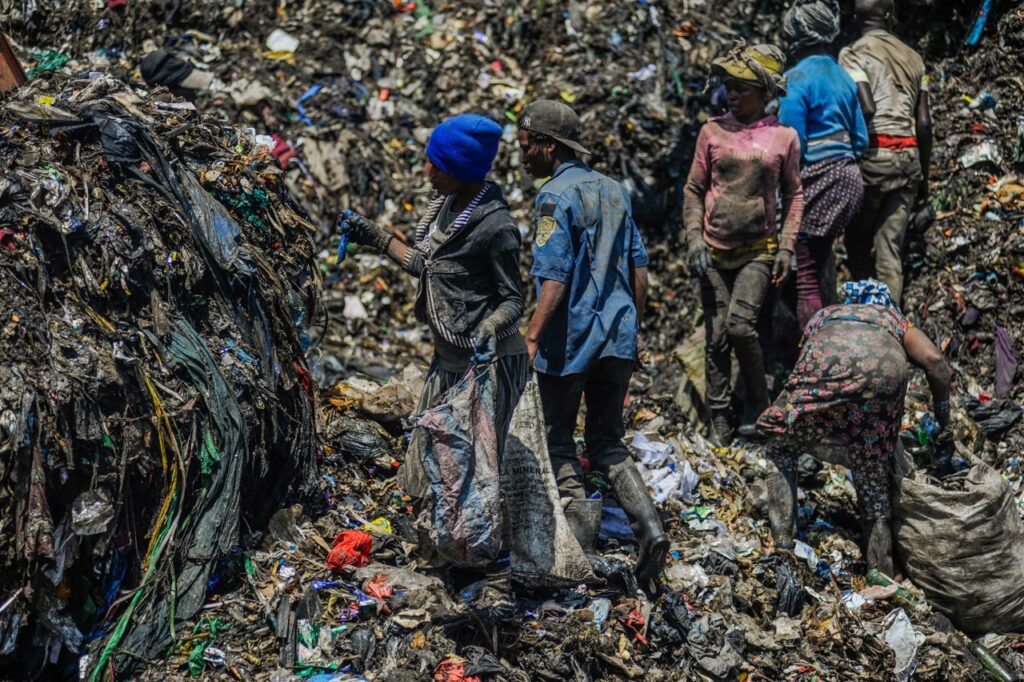
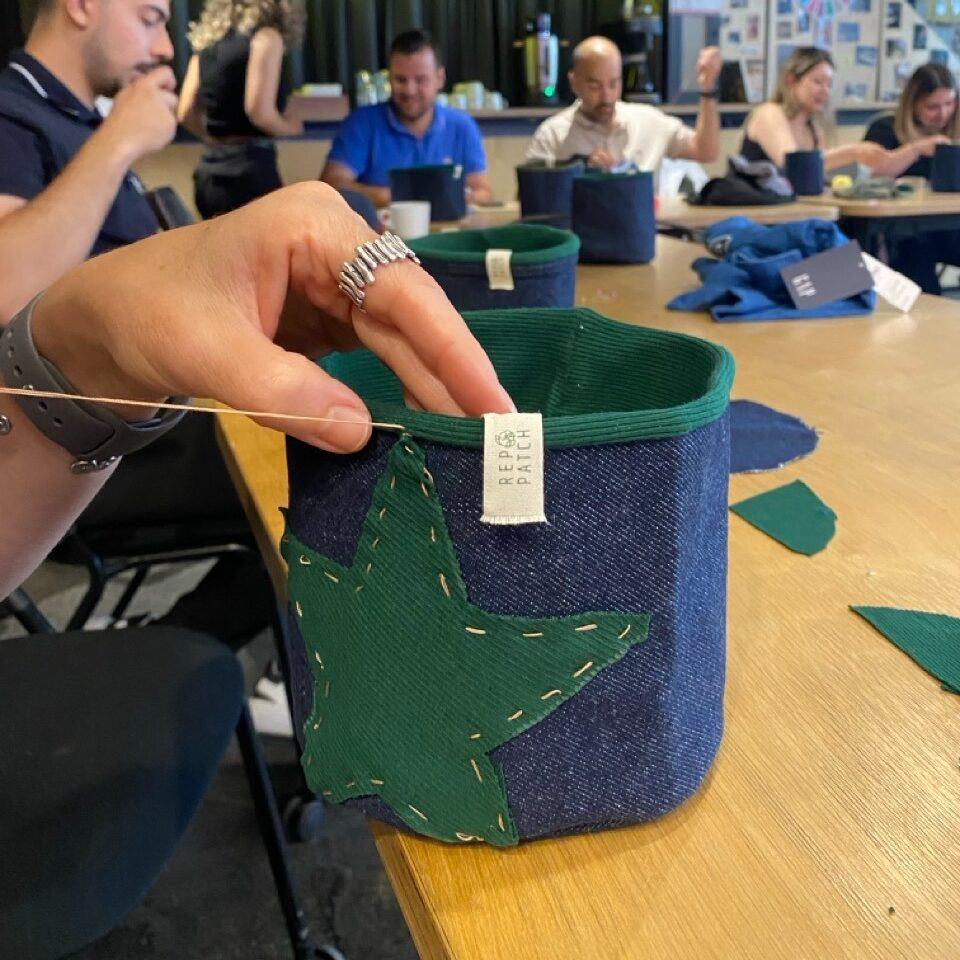
There is an important distinction here. Waste in textile production does not consist only of clothes that consumers have used and thrown away. Yarn, fabric, cutting scraps, samples, defective products, and excess stock can also arise before the product even reaches the consumer. These are called “pre-consumer” textile waste. Used products that have reached the end of their useful life fall into the “post-consumer” waste category. Pre-consumer waste also includes products damaged in stores. Some garments can become damaged after reaching the store due to spotlights or folding methods. In fact, in a project carried out by Reppatch with Gap Türkiye, which is part of the Fiba Holding group, garments damaged in stores were used.*
To explore these two concepts and how waste is generated in textile production in more detail, you can read Reppatch’s Textile Waste Management article.
What Happens to Unsold Clothes?
One of the invisible problems of fast fashion is products that have never been used.
Not every garment that is produced is sold. As a result of inaccurate demand forecasting, rapidly changing trends, returns, or collections being renewed within short periods of time, significant quantities of products can become excess stock before they even reach a consumer’s wardrobe.
The European Commission states that an estimated 4% to 9% of textile products on the European market are destroyed before ever being used. This loss is calculated to be associated with approximately 5.6 million tonnes of CO₂ emissions. This issue is no longer only an ethical matter discussed by environmental organizations.
As of 19 July 2026, a regulation prohibiting large companies in the European Union from destroying unsold clothing, clothing accessories, and footwear entered into application. The regulation encourages companies to keep products in circulation rather than destroy them, prepare them for reuse, and consider different circular solutions. You can review the European Commission’s current explanation of the regulation through the EU regulation on the destruction of unsold textile products.
This development actually points to a very important shift in mindset: A product does not have to become worthless when it cannot be sold.
Different approaches such as repair, reuse, remanufacturing, donation, upcycling, and, where appropriate, recycling can help keep the product or material within the economic system.
Fast Fashion and Water Use
It is impossible to ignore water when discussing the environmental impacts of textile production.
Water is used at different stages of the textile value chain, from growing natural fibers such as cotton to dyeing and finishing fabrics. Dyeing, washing, bleaching, and similar wet processes are also important not only in terms of water consumption but also because of the chemicals used and the management of wastewater.
Reducing the water footprint of a garment to a single number can often be misleading. Many variables affect the result, including the region where the fiber is grown, the production method, the energy source, dyeing technology, and the factory’s water management practices. For this reason, rather than relying on a single figure such as “a T-shirt uses exactly this many liters of water,” it is healthier to understand the overall resource intensity of the textile production system.
UNEP states that the textile sector’s annual water use reaches approximately 215 trillion liters.*
The key issue here is this: If a product is going to be used for a very short period of time, the duration of the benefit provided by all the water, energy, and raw materials used in its production will also be short. For this reason, sustainable fashion does not only mean “producing with fewer resources,” but also using products that have already been produced for longer.
The Hidden Cost of Fast Fashion: A System Extending from Production to the Wardrobe
The impact of fast fashion is not limited to the products we see in stores. Before reaching us, a garment may be part of a long production chain that passes through different parts of the world. Fiber may be produced in one country, turned into yarn somewhere else, woven or dyed in a different region, garment production may be completed in another country, and the product may eventually travel thousands of kilometers before reaching to the store. Energy, water, and various raw materials are used throughout this process; therefore, the environmental impact of a garment comes not only from logistics but from the entire production process.
However, evaluating fast fashion only through its carbon footprint or resource consumption would also be incomplete. Bringing products to market very quickly and at low cost results in complex and often multi-layered supply chains. For this reason, worker wages, working hours, occupational safety, and the transparency of production processes are also the important parts of the fast fashion debate. A product may be made from recycled material, yet its production conditions may not be socially sustainable. Similarly, a product produced under ethical conditions may create other environmental problems if it is designed to have a very short lifespan. Sustainable fashion therefore requires looking not only at material selection but at the entire life cycle of the product.
The final link in this life cycle is the consumer. When buying a new product, we often ask ourselves, “Do I like this?” We need to add another question: “How much will I use this?” Because the environmental impact of a product is connected not only to how it is produced but also to how long it is used. Using a garment that still serves its function for a long time can reduce the need to produce a replacement and preserve the value of the energy, water, raw materials, and labor used during production for longer.
For this reason, sustainable consumption does not simply mean choosing “greener” products when shopping. Sometimes the most sustainable option is the product that is already in our wardrobe. Repairing, restyling, sharing, using second-hand options, or finding a new use for a product that no longer fulfills its original function can help products remain in the system for longer.
For this reason, it is not enough to view the fast fashion problem as the responsibility of producers or consumers alone. Longer-lasting designs, more transparent and fair production processes, more efficient use of resources, and changes in consumption habits must be considered together.
From Fast Fashion to Circular Fashion: The Role of Upcycling
Upcycling refers to transforming a product or material that is no longer used or is considered waste into a new and more valuable product through design. While in recycling the material is generally processed in order to obtain raw material again, in upcycling an existing waste or surplus material is transformed into a different product through design and reused. For example, separating an old pair of denim jeans into fibers may be part of a recycling process, while redesigning the same pair of jeans into a bag, accessory, or another product can be an example of upcycling.
The importance of this approach for fast fashion does not arise only from reducing waste. Upcycling encourages us to look again at the materials we already have before producing a new product. Even if the original use of a garment has ended, the fabric, labor, and resources used during its production may still carry value. Keeping this value within the system for as long as possible is one of the important parts of transitioning from the linear “produce, use, discard” model toward a more circular approach to fashion.
Of course, upcycling cannot solve all of the problems of fast fashion, such as overproduction, short periods of use, intensive resource consumption, and social issues, on its own. However, it asks an important question that changes our perspective: “Is this product really a waste, or could it be the beginning of another use?” This question matters not only for designers but also for brands and consumers. Designing longer-lasting products, repairing existing products, reusing them, supporting second-hand systems, and upcycling suitable materials can collectively contribute to making the fashion system more circular.
You can explore the basic principles of upcycling, its differences from recycling, and how different materials can be reused in more detail in Reppatch’s Upcycling 101 guide.
The strongest alternative to fast fashion may not simply be producing fewer products, but preserving the value of products and materials that have already been produced for longer.