


The endowment effect is a behavioral economics concept that describes the tendency of individuals to assign a higher value to objects they own compared to similar objects they do not own. First introduced by Richard Thaler, this concept was later scientifically supported by experiments conducted by Daniel Kahneman and Amos Tversky.
To explain with a simple example, the price you are willing to pay to buy a coffee mug is often not the same as the selling price you would quote to someone who wants to buy the same mug from you. The moment you own the mug, the value you assign to it increases. This difference is not due to economic factors, but rather psychological ones.
How does the Endowment Effect occur?
The endowment effect isn’t caused by a single factor. It arises from a combination of several key psychological mechanisms underlying human behavior.
The most important of these mechanisms is loss aversion, a fundamental concept in behavioral economics. People feel the negative emotion of losing something much more strongly than the happiness of gaining it. Therefore, giving up an object is perceived not only as a physical separation but also as an emotional loss.
Another important element is the identity relationship we form with objects. Over time, the things we own become part of the question, “Who am I?” The handbag you got at your first job, a sweatshirt from your college years, or a suitcase you carried on a long journey… These objects are not only functional; they are also carriers of your personal story.
At this point, objects transcend their physical existence and become “memory capsules.”
The Connection Between Memories and Objects
One of the areas where the endowment effect is felt most strongly is with objects with which we have formed emotional bonds. Because some objects don’t just serve a purpose; they also represent specific memories, emotions, and experiences.
A t-shirt might remind you of a concert.
A bag, a trip.
A piece of fabric, an era.
That’s why it’s difficult to get rid of some objects. Because when that object disappears, there’s a feeling that the memory associated with it will also be erased. Scientifically speaking, objects are powerful stimuli that trigger memory. Touching or seeing an object can recreate a past experience in the mind.
This clearly shows why the ownership effect is much more than just rational economic behavior. For those who want to delve deeper into this topic, the concept of Episodic Memory is a good starting point.
Endowment Effect and Consumption Behavior
Today’s fast-paced consumer culture weakens the bond we form with products. Mass production, low-cost products, and constantly changing trends make objects “easily replaceable.”
However, the endowment effect doesn’t always keep pace with this rapid cycle.
People don’t easily consume products, especially those they’ve invested time, effort, or meaning in. Therefore, the “overpricing” often seen on second-hand platforms or in individual sales is usually due to the ownership effect, not market conditions.
This demonstrates that consumption habits are shaped not only by economic but also by psychological dynamics.
The Relationship Between Upcycling and the Ownership Effect
Upcycling is a method that allows waste or unused materials to be reused without decreasing their value, but rather increasing it. Unlike recycling, the material is not completely broken down; its existing state is preserved and transformed into a new form.
This process is directly related to the endowment effect.
When labor is invested in an object, the value attributed to that object increases. This stems not only from ownership but also from involvement in the production process. In behavioral economics, this is sometimes referred to as the “IKEA effect”; people value products they have contributed to more.
Upcycling strengthens this effect because a person not only owns an object but also participates in its transformation process. This increases both the emotional and perceived economic value of the object.
Endowment Effect and Sustainability
Thinking about the endowment effect through a concrete example will make the concept clearer.
Let’s consider a wedding dress that has been kept for years. It may have been bought with the intention of being worn only once, and it may not be in line with current fashion trends. However, it is often not thrown away. Because such objects are not just clothing, but a representation of an important moment in life.
Let’s imagine this wedding dress being redesigned and worn by the next generation.
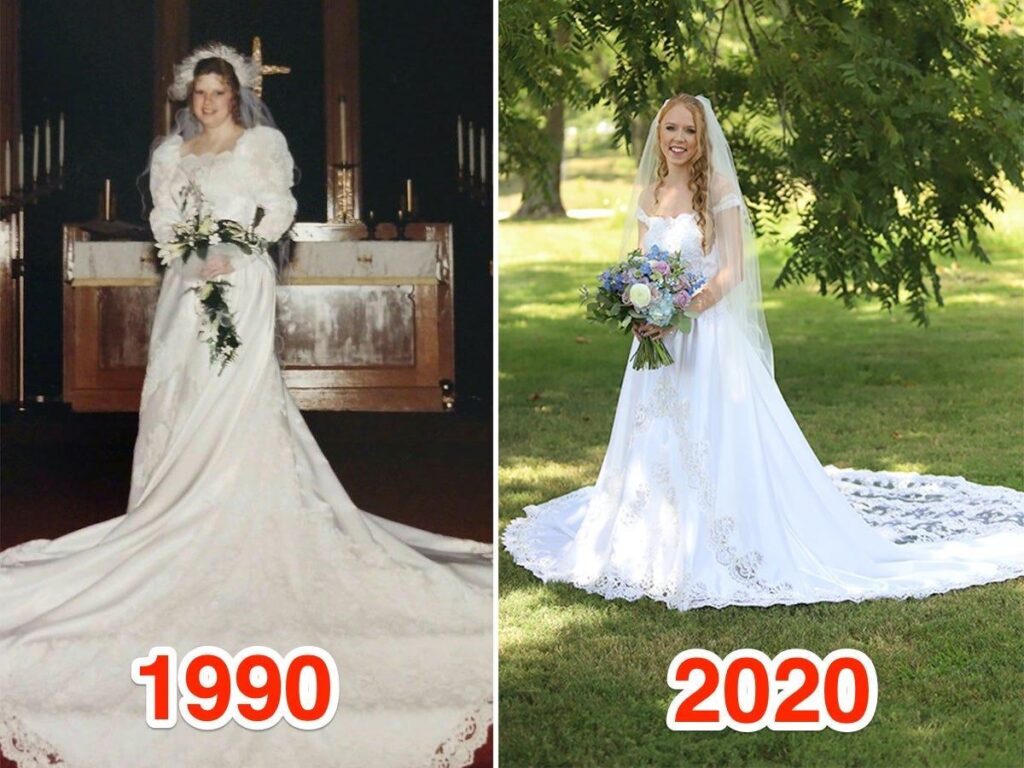
What happens in this case is not just a physical transformation. A memory from the past merges with the experience of the present, gaining new meaning. The object’s value increases because it now represents both the past and the present.
These examples demonstrate that upcycling creates not only environmental but also emotional and cultural value.
People tend to preserve things they value. Therefore, imbuing a product with meaning can extend its lifespan, directly leading to less waste.
Upcycling practices are a powerful tool in this regard. Redesigning a product gives it a new story and strengthens the bond between the user and the product. This bond ensures the product lasts longer.
Reppatch Perspective
At Reppatch, we adopt an approach that acknowledges that objects have not only physical but also emotional value. In upcycling projects, we consider the history of the materials and the meaning they carry as part of the process.
The endowment effect is a powerful concept that explains why people value the objects they own more. This effect is directly related to psychological processes such as loss avoidance, identity formation, and the bonding of memories.
While current consumption habits tend to weaken this bond, approaches like upcycling have the potential to strengthen it again.
The value of an object is determined not only by its production cost but also by the meaning it carries. Therefore, for a sustainable future, we need to rethink not only how we produce but also how we relate to objects.